
AI
Are experimentation practitioners the unsung superheroes of AI?
Yesterday, I had the good fortune of attending the Financial Review’s AI Summit. What stood out was the sheer overuse of the word 'experiment.'
As a seasoned practitioner of experimentation and someone relatively new to AI, I was struck by how naturally the principles of experimentation align with this new frontier. In a space where testing, learning, and adapting are essential, our years of experimentation practice are not just relevant they're foundational.
It excited me to know that experimentation practitioners may be better equipped than anyone else. The people who’ve spent their careers running A/B tests, building cultures of test-and-learn, and proving the business case for data-informed decisions. exciting, right!
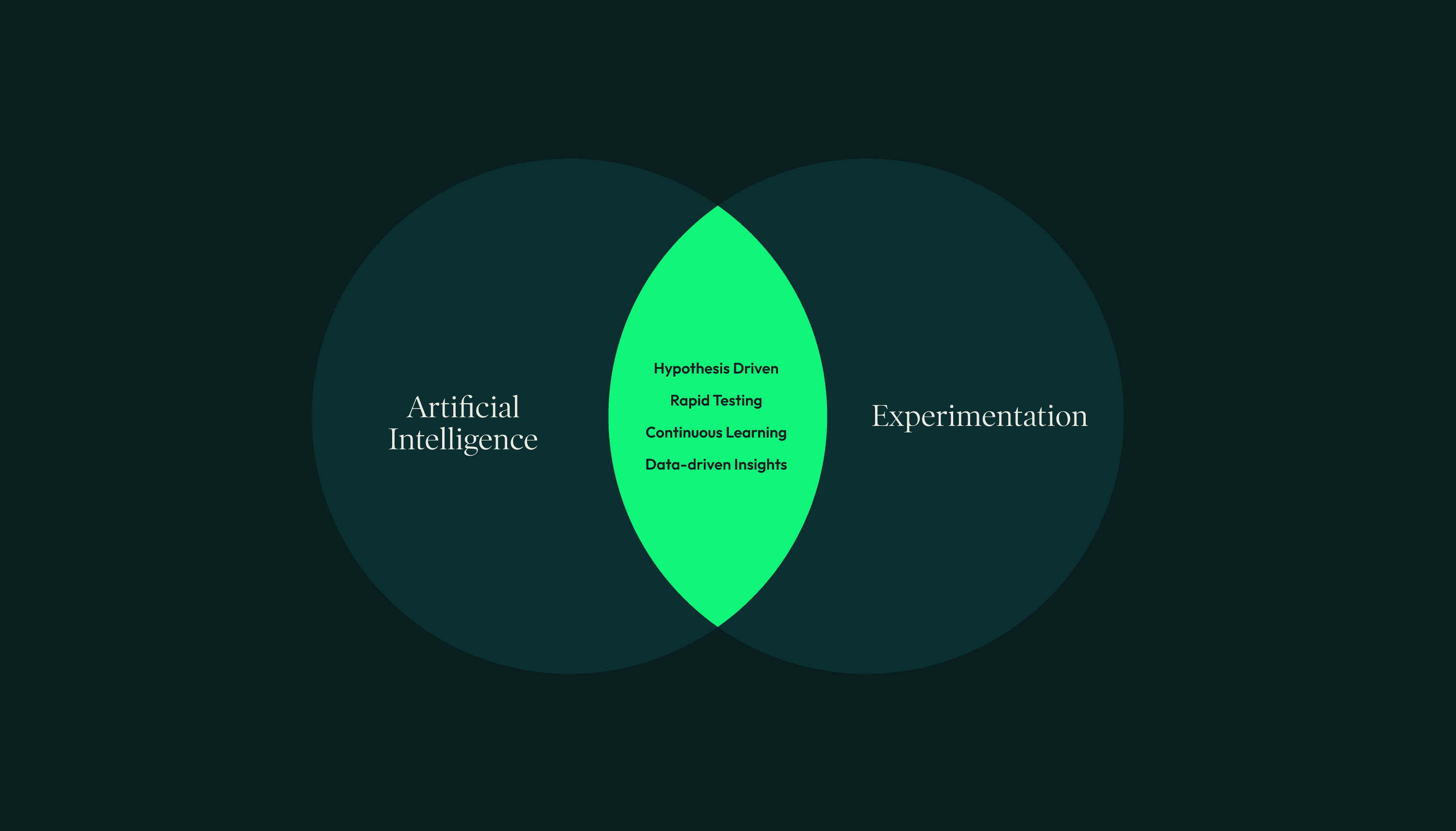
At first glance, AI and experimentation may seem like separate disciplines. One is technical and model-driven; the other operational and iterative. But look more closely, and the overlap becomes impossible to ignore. Both require hypothesis-driven thinking, rapid testing, continuous learning, and a deep comfort with failure and ambiguity. These shared behaviours make experimentation experts uniquely positioned to help organisations move AI from hype to impact.
According to the World Economic Forum’s 2023 Future of Jobs Report, AI and machine learning specialists are expected to be the fastest-growing job category over the next five years, with a projected growth of over 40%. But the report also highlights the rising demand for a new kind of role, AI enablers. These are the professionals who can help validate use cases, design safe testing environments, drive adoption, and embed AI into real-world workflows. This is precisely the work experimentation leaders already excel at.
Despite this, in many organisations AI and experimentation efforts remain siloed. AI is often treated as an R&D function, while experimentation lives within marketing, product, or UX teams. This disconnect creates major friction: AI pilots without meaningful use cases, models built in isolation from user behaviour, and business teams unsure how to evaluate or trust AI tools.
Organisations that want to move faster with AI need to bring experimentation and AI teams together. This starts by embedding experimentation leads into early-stage AI pilots. These professionals are already trained to frame hypotheses, define measurable outcomes, and set up controlled test environments. Whether it’s testing AI-generated copy against human-written content or evaluating a new recommendation engine, experimentation experts can design real-world trials that produce business-ready insights.
Next, companies should create shared learning loops between experimentation and AI teams. While AI engineers may be focused on model accuracy or latency, experimentation professionals are fluent in human impact, metrics like engagement, satisfaction, and conversion. These are the outcomes that matter when AI moves into production. A good example is a support team testing AI-assisted replies: while the model might be 90% accurate, the experimentation team will spot where customer trust breaks down or service time increases.
To support this collaboration, organisations should also establish shared operating rhythms such as combined planning sessions, retrospectives, and reporting forums. Making test results visible across teams and aligning AI experiments to core business KPIs can unlock significant value. One fintech startup, for instance, created a joint experimentation guild where data scientists, prompt engineers, product managers, and testing leads work from a common backlog. The result? Faster validation, more reliable rollouts, and stronger adoption across the business.
Of course, this integration only works if experimentation teams are given the AI context they need. While no one’s expecting CRO managers or UX optimisers to become machine learning engineers, a foundational understanding of AI tools such as prompt design, model bias, and generative output evaluation allows them to ask smarter questions and design more effective tests.
Ultimately, AI is moving from being a tool to a team mate. And like any team mate, it requires the right mindset, structure, and behavioural scaffolding to succeed. The businesses that will thrive in this new era won’t necessarily be those with the largest data teams or the most advanced models. They’ll be the ones that already know how to frame good questions, run good tests, and make smart decisions based on data. In other words, they’ll be the ones that have already built strong experimentation muscles.
If you’re an experimentation lead, a CRO manager, a product optimiser, or a test-and-learn advocate, this is your moment. You don’t need a new job title to step into AI, you just need to do what you’ve always done: ask smart questions, test assumptions, and help teams learn.
AI will reward those who can learn faster than others. And no one learns faster than an experimentation practitioner.
